
Spain vs Portugal: Which Is Easier and Cheaper to Move To?
Spain and Portugal top the list for UK movers, but this Spain vs Portugal moving comparison looks past the sunshine at what actually differs: residency paperwork, customs rules for your belongings, removals logistics, and living costs once you arrive. David Dale has been moving people across Europe since 1976 and has run a weekly UK to Spain service for over 30 years, so we have seen where each route runs smoothly and where it slows down.
Here is the short version, followed by the detail.
Spain vs Portugal at a Glance
| What you are comparing | Spain | Portugal |
|---|---|---|
| Residency paperwork | Well established, usually faster | Achievable but slower at present |
| Removals frequency from the UK | Weekly consolidated service | Regular runs, less frequent |
| Typical lead time to book a move | Around 4 to 8 weeks | Around 6 to 10 weeks |
| Living costs | Low to moderate, varies by region | Similar, coastal areas now pricier |
| Customs relief for your goods | Yes, Transfer of Residence | Yes, Transfer of Residence |
The honest headline: Spain tends to be easier on paperwork and logistics, while cheaper depends far more on the region you pick than the country. Immigration and tax rules in both countries change often, so treat the detail below as a starting point and confirm the current position with the relevant consulate and a qualified adviser before you commit.
Residency and Paperwork
This is where the two countries differ most for UK nationals since Brexit.
Spain uses the non-lucrative visa (NLV) as the standard route for people who are not working. You apply from the UK before you leave and supply proof of income or savings, private health insurance, and a criminal record certificate. The income threshold is revised each year, so check the current figure with the Spanish consulate. Processing usually takes one to three months. Once in Spain, you register on the Padrón at your town hall and apply in person for your TIE residence card.
Portugal offers the D7 passive income visa as its closest equivalent to Spain’s NLV, with similar documents and an application made before you arrive. Processing often runs longer, commonly three to six months at the consulate stage. Portugal’s immigration service was restructured into AIMA in late 2023 and has faced appointment backlogs, so allow extra time for residency card appointments. Portugal’s well-known NHR tax regime also closed to new applicants at the start of 2024 and was replaced by a narrower scheme, so do not assume the old tax breaks still apply. Take current professional tax advice.
Verdict on paperwork: Spain’s process is better established and, for most applicants, faster right now. Portugal’s route is achievable but slower while AIMA works through its backlog. Start either process at least six months before your intended move date.
Importing Your Belongings: Customs and Transfer of Residence
Since Brexit, both countries treat a UK removal as a third-country import. The good news is that Spain and Portugal both offer Transfer of Residence (ToR) relief, which lets you import used household goods free of import duty and VAT when you meet the conditions.
| Condition | Spain | Portugal |
|---|---|---|
| Lived outside the EU before the move | At least 12 months | At least 12 months |
| Goods owned and used before the move | At least 6 months | At least 6 months |
| Establish your main residence within | 12 months of first import | 12 months of first import |
| Application timing | Before or at the point of import | Before or at the point of import |
| Key paperwork | Change-of-residence proof plus a full inventory | Change-of-residence proof plus a full inventory |
Both countries require a detailed inventory of everything you import, and it is not optional. At David Dale, your coordinator prepares the inventory, supports the ToR application, and liaises with the destination customs agent as part of our European removals service.
New goods, items bought in the UK shortly before departure, vehicles, and commercial stock sit outside ToR relief and are assessed for duty and VAT at the normal rates.
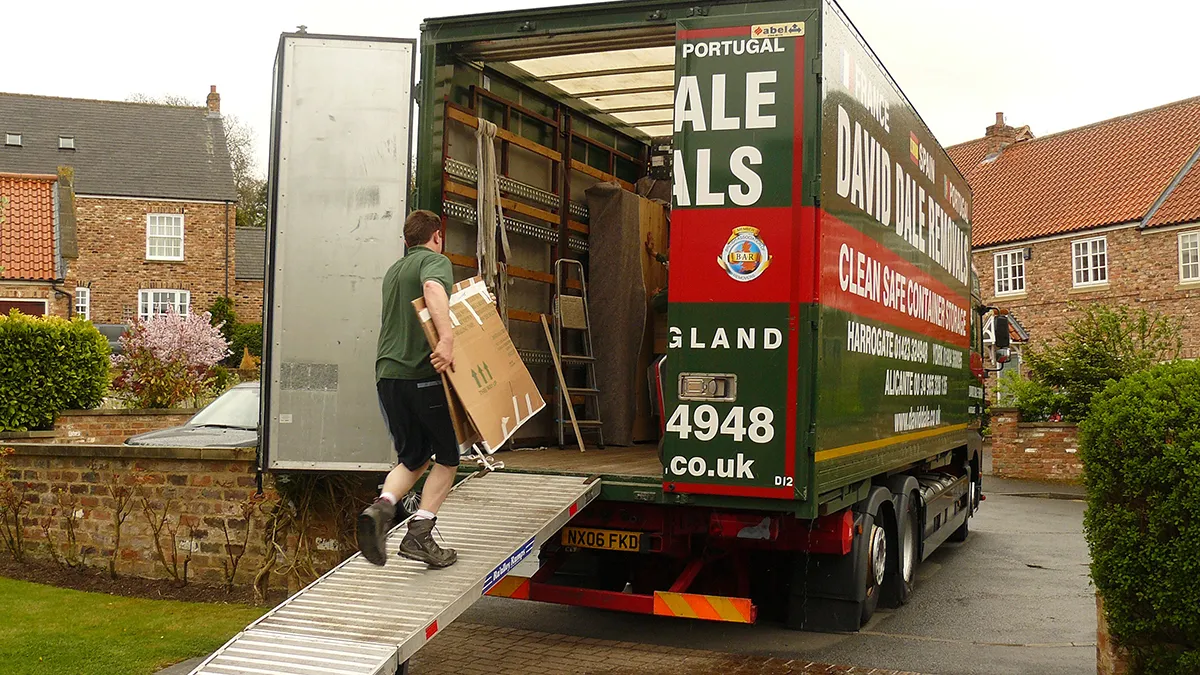
Removals Logistics: Getting Your Belongings There
For cost and lead time, frequency and infrastructure matter more than distance.
To Spain: David Dale runs a weekly consolidation service between the UK and Spain around 50 weeks of the year. We collect across North Yorkshire and the wider UK, bring goods to our North Yorkshire base, then move them onward to our own depot in Almoradi. Because we manage both ends rather than handing off to a subcontracted Spanish operator, you have one point of contact throughout. Transit is typically around a week door to door, depending on your collection and delivery points. See our removals to Spain page for more.
To Portugal: We handle Portugal moves as part of our wider European service, with regular runs rather than the same weekly frequency as Spain. Moves usually run on a consolidated basis when volumes align, or as a dedicated vehicle for larger households, which can mean a little longer to confirm a departure date. Road transit is broadly similar to Spain, with a border leg through Spain. See our removals to Portugal page for details.
Cost comparison: A full three-bedroom move to southern Spain or central Portugal usually lands in a similar price band for like-for-like service, covering packing, transit, customs paperwork, and delivery. The weekly Spain service means Spain moves can sometimes be scheduled sooner.
Cost of Living Once You Arrive
Your removals cost is one-off, but running costs shape your life for years. Both countries are cheaper than the UK for everyday living, though the gap between them has narrowed. For current figures, a tool such as Numbeo lets you compare specific cities side by side.
Spain, especially inland and along the southern coast, stays among the more affordable EU countries for utilities, food, and healthcare. Private health insurance is a requirement for the non-lucrative visa, so budget for a policy. Property transfer tax (ITP) varies by region. Andalusia, a popular choice with UK movers, has applied a rate of around 7% on resale homes in recent years, but rates change, so check the current figure.
Portugal became noticeably more expensive in Lisbon, Porto, and the Algarve over recent years, and coastal Algarve prices now rival parts of southern Spain. Inland Portugal and the Silver Coast remain better value. Property transfer tax (IMT) is worked out on a sliding scale that reaches roughly 7.5% to 8% for higher-value homes.
Costs that catch people out: both countries charge an annual property tax (IBI in Spain, IMI in Portugal) and expect an annual tax return once you are resident. Most newcomers use a local gestor in Spain or a contabilista in Portugal, which are administrator or accountant roles, at a cost of a few hundred euros a year for straightforward returns.
Common Mistakes When Moving to Spain or Portugal
- Shipping before residency is confirmed. ToR relief depends on you establishing residence, so moving your belongings before the visa is approved puts the relief at risk.
- Under-declaring the inventory. Spot checks do happen, and an inaccurate inventory can hold up the whole shipment.
- Assuming it works like it did before Brexit. Both countries have changed their procedures. What a friend did a few years ago may no longer apply.
- Choosing a broker with no owned infrastructure in-country. A firm that subcontracts the local leg has less control over delivery, and you have less recourse if something goes wrong.
One more thing to budget for: a local customs agent charges a handling fee to process the import documents, separate from your removals quote. Your coordinator can tell you the typical amount for your route.

FAQ
Yes. Since Brexit, all UK household goods entering Spain or Portugal count as a third-country import. A customs agent at the destination handles the Transfer of Residence declaration for you. At David Dale, our European removals coordinator works with established customs agents on both the Spain and Portugal routes and includes customs paperwork support as part of the service, so you do not arrange it separately.
For Spain, our weekly service means most moves can be scheduled within about four to eight weeks of booking, once your survey and volume are confirmed. For Portugal, allow around six to ten weeks so we can align your move with a suitable departure. Both assume your visa and residency paperwork is already under way. If it is not, start that first, because the removals booking can flex more easily than a consulate appointment.
Yes. We offer car and bike transportation as part of the European removals service. Vehicles brought in under Transfer of Residence rules follow the same twelve-month ownership condition as household goods. Your coordinator will advise on the exact documentation needed for your vehicle and destination.
The removals cost to either country is broadly comparable for similar volumes and service levels. The bigger variable is timing, because Spain’s weekly service means less waiting, which can cut short-term storage costs if your move-in date is fixed. Living costs once you arrive depend heavily on the region. A rural inland home in either country costs far less than a coastal property in Marbella or the Algarve.
Ready to Move to Spain or Portugal?
David Dale has been moving households from North Yorkshire and across the UK to Spain and Portugal for decades. Our weekly UK to Spain service, our own depot in Almoradi, our membership of the British Association of Removers (BAR), and a single-coordinator model mean you have one point of contact from survey to delivery. Get a fixed-price quote for your European move or call us on 01423 324 948.
You may also be interested in: Removals to Spain · Removals to Portugal · European removals · European removals cost comparison · Moving to Portugal from the UK: a checklist · Online quote