
Part Load Removals to Europe
Part load removals to Europe are how most people move to Spain, France or Portugal without paying for a whole lorry they will not fill. Your belongings travel in a measured section of a scheduled vehicle, so you pay for the cubic metres you use, not the entire truck. David Dale has been moving households between the UK and Europe since 1976 and runs a weekly UK to Spain service around 50 weeks of the year from our North Yorkshire base, with regular runs to France and Portugal.
This guide explains how part loads work, who they suit, what they cost against a dedicated vehicle, how long they take, and how to get a fixed price.
Member of the British Association of Removers (BAR). All work fully insured. A numbered inventory on every move. Our own depots in the UK and Spain, so your move is not handed to a subcontracted broker.
What This Page Covers
- What is a part load removal to Europe?
- Two ways to book a part load
- Who suits a part load?
- Part load vs dedicated vehicle: cost
- A rough guide to your volume
- How long does a part load take?
- How the move works, step by step
- Packing on a part load
- Customs after Brexit
- Storage if your property is not ready
- FAQs
What Is a Part Load Removal to Europe?
A part load, also called groupage or a shared load, means your consignment travels in a clearly separated section of a lorry that is already running a scheduled European route. Several customers’ shipments share the same vehicle, and each pays only for the space their goods take up.
For you, the practical differences from a dedicated move are simple:
- You pay per cubic metre, not for the whole vehicle.
- The route and departure schedule are set in advance.
- You get a surveyed, written fixed-price quote before loading, not a rough figure that moves on the day.
- Your goods are packed and handled to the same standard as a dedicated move.
A reputable operator surveys your volume before quoting. If a company prices a part load without a survey or a proper inventory, expect that quote to change at loading.
Two Ways to Book a Part Load
Most part loads run in one of two ways, and the right one depends on how fixed your dates are.
- Flexible part load. The most economical option. You give us a delivery window rather than a single date, and your goods join the next scheduled run once the vehicle is consolidated. Best when your timeline can flex by a week or two.
- Fixed-date part load. You need a specific collection or delivery date, so we build the run around your dates and fill the remaining space with other consignments. It costs more than a flexible part load but still far less than booking a dedicated vehicle.
If your dates are locked to a property completion, tell us at survey so we quote the right option from the start.
Who suits a part load?
Part load removals to Europe work well for a specific set of situations.
- Downsizing from a European property. Moving back from a villa or apartment in Spain but leaving or selling some furniture. You might have two bedrooms, a kitchen and a sitting room to move, rarely a full lorry.
- Furnishing a second home. Sending a selection of furniture, art or personal effects to a property in France, Portugal or Spain without moving your whole household.
- Splitting a household across two countries. One partner relocates first, with the rest following later. A part load handles the first consignment without committing to a full vehicle.
- Single items or one room. A piano, a few antiques, or the contents of a home office. Courier rates for this kind of job can be high and the handling rougher, so a part load with proper export packing is often the better fit.
If you are moving almost the entire contents of a three or four-bedroom home, price a dedicated vehicle alongside the part load. The gap narrows as the load grows.
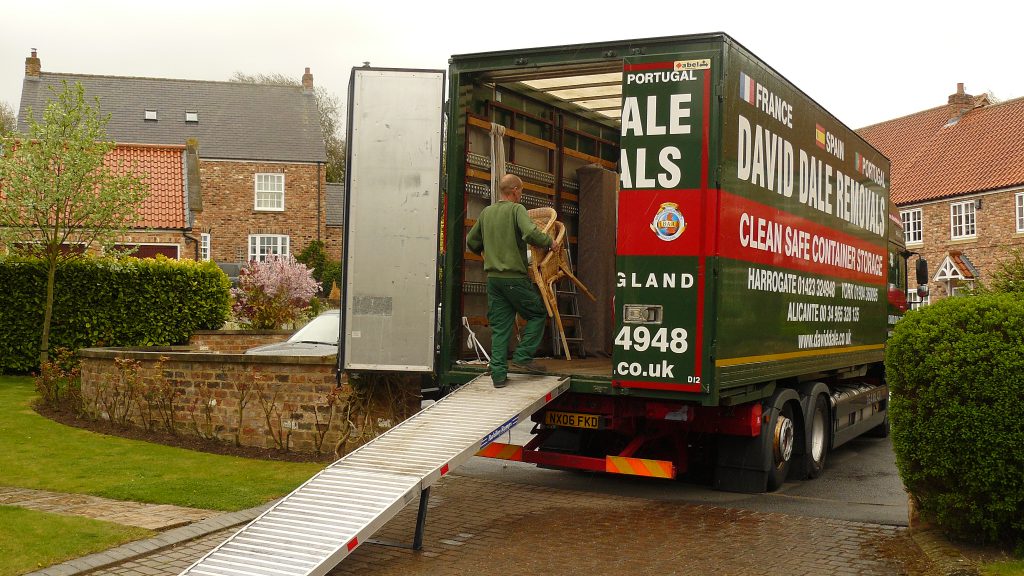
Part Load vs Dedicated Vehicle: What It Costs
As a general guide, part loads are the more economical choice up to around 30 to 40 cubic metres. Beyond that, a dedicated vehicle starts to compete, because you are booking most of the truck anyway.
| Load size | Part load | Dedicated vehicle | Typical property |
|---|---|---|---|
| Under 15 cu m | Most economical | Not usually offered at a sensible price | A few items or one room |
| 15 to 30 cu m | Usually cheapest | Higher | 1 to 2-bed flat or a partial move |
| 30 to 45 cu m | Worth pricing both | Worth pricing both | Larger flat or a small villa |
| 45 cu m and above | Limited space available | Usually better value | Full house or large villa |
If your load sits between 30 and 45 cubic metres, get both options quoted. The difference is often smaller than people expect, and a dedicated vehicle buys you a fixed collection and delivery date.
A Rough Guide to Your Volume
Volume is what drives a part load price, so it helps to have a rough idea before your survey. The figures below are approximate industry guides only. A survey confirms the accurate figure your fixed price is based on.
| Property | Rough volume |
|---|---|
| Studio or one large room | 8 to 15 cu m |
| One-bedroom flat | 15 to 25 cu m |
| Two-bedroom home | 25 to 35 cu m |
| Three-bedroom home | 35 to 50 cu m |
| Four-bedroom home | 50 to 70 cu m |
Most people own more than they expect, so treat these as a starting point rather than a quote. A home or video survey takes around 30 minutes and removes the guesswork.
How Long Does a Part Load to Europe Take?
Part loads run to a schedule, not on demand. The lorry departs once it has enough consolidated volume for a viable run. Four things shape your timeline.
- Route frequency. Our weekly UK to Spain service means a typical booking-to-collection window of one to three weeks on Spain lanes. France and Portugal run regularly but a little less often, so allow a slightly longer window.
- Your flexibility on dates. A two-week window is far easier to slot onto the next run than a single fixed day.
- Time of year. Late summer and early autumn are busy on the Spain and Portugal lanes as second-home owners make their annual moves. Allow four to six weeks of lead time in peak periods.
- Your UK completion date. If you are waiting on a sale, the lorry cannot wait. We hold your goods at our North Yorkshire base and place them on the next scheduled run.
The transit times below are indicative for road groupage and vary with consolidation and season.
| Route | Frequency | Indicative transit |
|---|---|---|
| UK to eastern and southern Spain (Alicante, Costa Blanca, Murcia) | Weekly, around 50 weeks a year | About 5 to 9 days |
| UK to northern Spain (Bilbao area) | Weekly | About 4 to 7 days |
| UK to France (Dordogne, Brittany, Normandy) | Regular scheduled service | About 2 to 5 days |
| UK to Portugal | Regular scheduled service | About 5 to 10 days |
We move in both directions on these lanes. See removals to Spain, removals to Portugal and removals to France, or for the return leg, removals from France to the UK and removals from Spain to the UK.
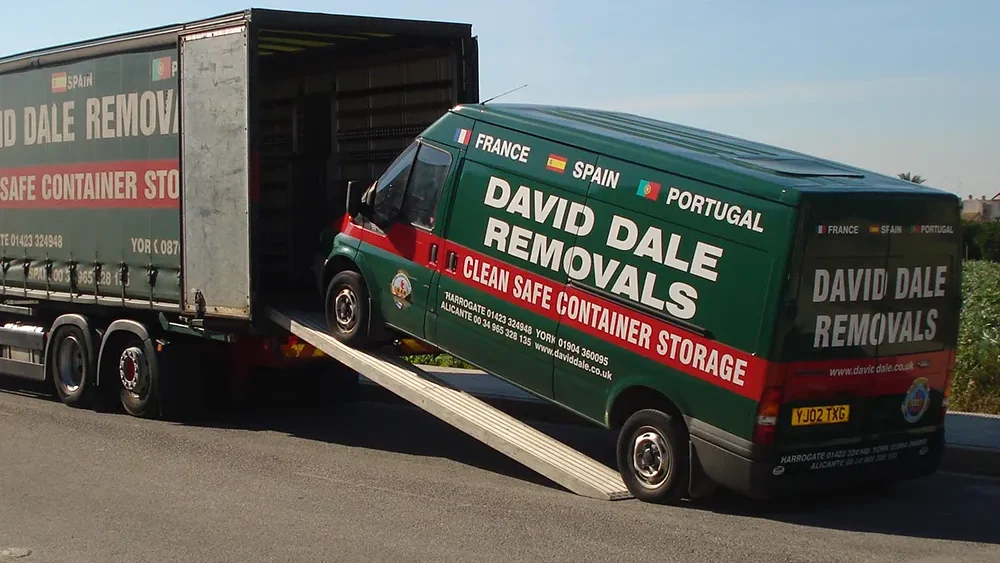
How the Move Works, Step by Step
- Survey. A home or video survey measures your volume accurately and flags any access issues at both ends.
- Fixed-price quote. We issue a written price covering collection, transit, packing if selected, and delivery.
- Packing. You choose how much you handle and how much we do.
- Collection and labelling. Every item is labelled and recorded on a numbered inventory as it is loaded.
- Customs documentation. Your coordinator prepares the paperwork before the vehicle departs.
- Transit. Your goods travel on the next scheduled run for your route.
- Delivery. Everything is checked off against the same inventory at your new address.
Packing on a Part Load
Packing standards on a part load are the same as on a dedicated move. Because your belongings travel alongside other consignments, proper protection matters more, not less. You have three options.
- Self-pack with our materials. We supply export-grade boxes, tape, bubble wrap and packing paper. You pack, our crew loads.
- Shared packing. You handle the straightforward items and our team takes over the fragile pieces, mirrors, pictures and furniture.
- Full packing service. Our crew handles everything and builds the numbered inventory as they go. This is the option we recommend for antiques, mirrors, stone tops and chandeliers, which benefit from export wrapping built for road transit and Channel crossings.
Packing is included in your fixed-price quote, not added on the day.
Customs After Brexit
Since Brexit, a move from the UK to an EU country is treated as a third-country import. It sounds daunting but is routine when it is handled properly, and getting the paperwork wrong is the main cause of delays.
Your coordinator prepares the documentation and works with the destination customs agent before the vehicle departs. Where Transfer of Residence relief applies, which lets people relocating permanently import used household goods free of duty and VAT when they meet the conditions, we explain what you need at survey. For the wider picture, see our European removals service and our guide to how international shipping works.
Storage If Your Property Is Not Ready
If your European home is not ready when you arrive, or your UK address is not free at collection, we hold your goods rather than leave your move in limbo. We run our own secure UK storage in North Yorkshire, and for moves involving Spain, our Almoradi depot can hold goods on the Spanish side if the timeline shifts at that end. Storage is included in your fixed-price quote when it is confirmed at survey. See our storage options for more.
Get a Fixed-Price Quote
The most accurate quote comes from a survey, either a home visit or a video call, so we price what you actually have rather than a rough description. Once surveyed, we issue a written fixed-price quote covering collection, transit, packing if selected, and delivery.
FAQs
Cost depends on your volume, the route, and whether you take a packing service. As a guide, a smaller part load under 15 cubic metres to Spain costs far less than a dedicated vehicle, and the gap narrows between 30 and 45 cubic metres. We do not publish fixed price bands because every job is surveyed individually, so the right way to get a number is a fixed-price quote after a survey.
On our weekly UK to Spain service, the typical booking-to-delivery window is around two to four weeks from confirming your collection date. France is shorter in road transit, about two to five days, and Portugal runs on a regular scheduled service. We confirm your window at survey so you have a realistic date before you commit.
There is no fixed minimum. We have moved single items such as a piano or the contents of one room as part loads. If your goods need removals-grade handling and protection rather than a parcel courier, a part load is usually the right solution whatever the size.
No. Every item is labelled with your details and recorded on a numbered inventory as it is loaded. That same inventory is used to check everything off on delivery, so your goods stay identified as yours throughout a shared load.
Yes. Car and bike transportation can be arranged alongside a part load. Flag it at survey so the vehicle is handled on its own declaration, which matters for customs because a vehicle has different import rules to household goods.
Yes. Moving from the UK to an EU country means your goods leave UK customs territory and enter an EU member state. The exact requirements vary by country and by what you are moving, and your coordinator prepares the documentation before loading. Where Transfer of Residence relief applies on the destination side, we advise on the conditions at survey.